
AI in Healthcare doctor using technology
TOP AI APPLICATIONS IN HEALTHCARE
Top AI Applications in Healthcare – Explore the best use cases of AI in healthcare. Discover innovative applications transforming patient care, diagnostics, and treatment. In short, this guide explains AI in Healthcare in plain language.
AI in Healthcare: Direct answer
AI in healthcare is transforming patient care and treatment. It helps doctors make faster decisions and improves patient outcomes. For instance, AI can analyze medical images and predict diseases, leading to timely interventions.
AI in Healthcare: Key Takeaways
- AI significantly improves diagnostic accuracy.
- Predictive analytics can prevent health issues before they arise.
- AI reduces administrative burdens for healthcare providers.
- Patient engagement is enhanced through AI-driven personalized solutions.
What’s New Today
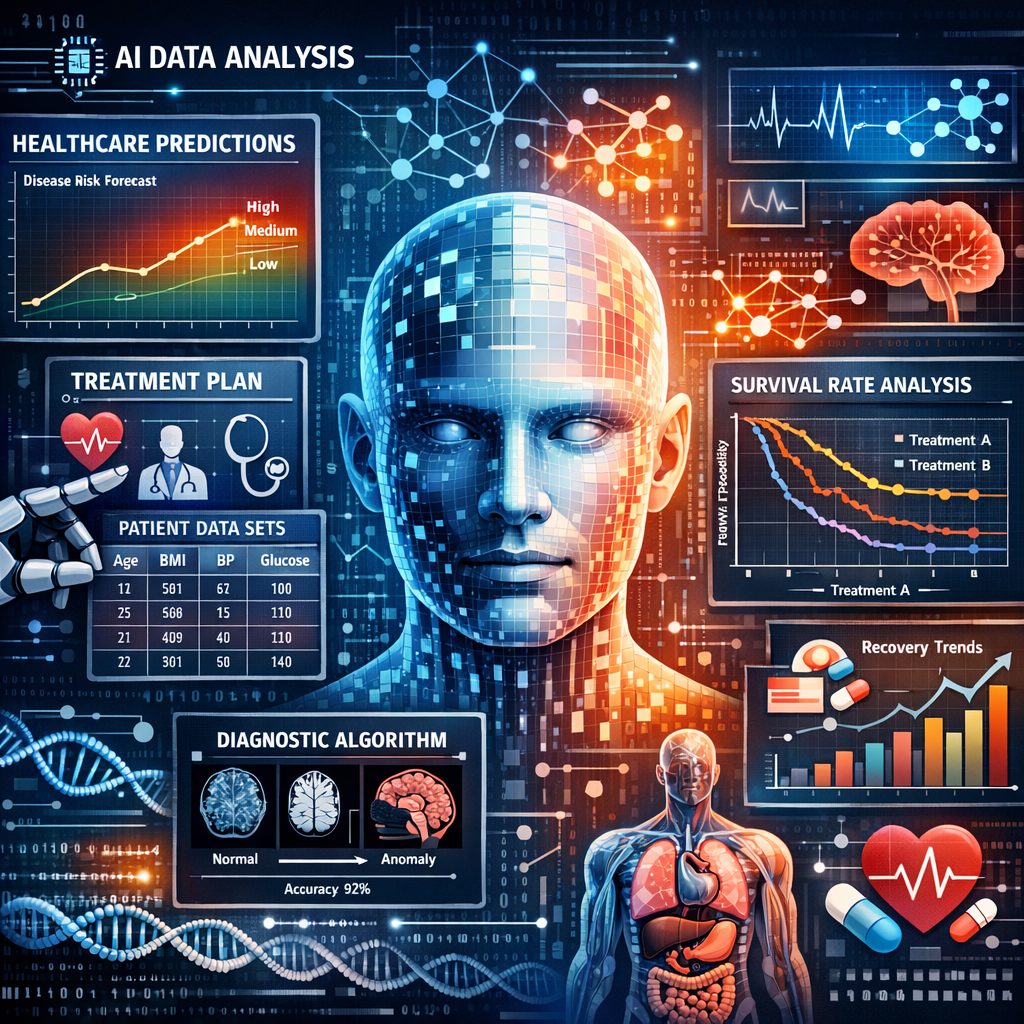
AI in healthcare is evolving rapidly. New applications are emerging that enhance patient outcomes and streamline operations. For example, AI systems now help radiologists interpret images with up to 94% accuracy in some cases [1]. This technology supports medical professionals, allowing them to focus more intensively on patient care, which is crucial in today’s fast-paced medical environment. With advancements such as deep learning and computer vision, AI can significantly reduce the time required for diagnostic processes, enabling quicker treatment decisions that can save lives.
Overview
Watch on YouTube
AI in healthcare refers to using artificial intelligence technologies to improve medical practice comprehensively. It involves machine learning, data analysis, and natural language processing, which are pivotal in today’s data-driven era. These tools help analyze vast amounts of health data to provide insights and predictions that were not previously possible, revolutionizing how healthcare professionals approach patient diagnosis and treatment. This transformation is not just about enhancing technology; it’s about shaping a new paradigm for healthcare delivery [2].
Key Features
- Image Analysis: AI can quickly analyze medical images to detect diseases such as cancer, heart conditions, and more, thereby increasing the likelihood of early detection and successful treatment.
- Predictive Analytics: AI utilizes past patient data to predict future outcomes, helping medical professionals to create customized treatment plans that can avert serious health crises.
- Personalized Treatment: AI tailors treatment plans based on individual patient data, including genetic information and lifestyle factors, making the approach to healthcare more individualized and effective.
- Administrative Efficiency: AI automates administrative tasks such as scheduling, billing, and patient record management, significantly reducing burdens on healthcare staff and allowing them to dedicate more time to patient care.
Pros and Cons
Pros
- Enhanced accuracy in diagnostics, leading to better medical outcomes.
- Improved patient engagement and satisfaction through personalized care solutions.
Cons
- Data privacy concerns, as sensitive patient information may be at risk if not managed properly.
- Potential job displacement in traditional roles, which could lead to workforce changes within the healthcare industry [3].
Key Insights
As AI continues to be integrated into health systems, adoption rates increase. A recent study indicates that about 30% of healthcare organizations are planning to invest in AI technologies in the near future [2]. This trend suggests a growing recognition of AI’s capabilities and its potential to transform healthcare processes into a more efficient, patient-centered model.
Patterns
AI systems have the ability to identify patterns that may be missed by human providers. For instance, AI can analyze patient data across demographics and detect trends that inform better treatment plans [4]. Such analyses can lead to more effective health interventions by understanding which groups are most at risk and why, thereby offering an evidence-based approach to healthcare delivery.
Controversies
There are persistent debates about AI’s role in healthcare decision-making processes. While many experts argue that AI can substantially enhance decision-making capabilities, others express concerns that reliance on technology might reduce essential human intuition in critical cases. Balancing AI’s efficiency with the irreplaceable value of human touch remains a topic of significant discussion [5].
Blind Spots
Despite its many benefits, AI in healthcare faces several blind spots. The quality of AI predictions depends heavily on the data quality and completeness. Without rigorous data standards, outcomes can be misleading, potentially impacting treatment decisions and patient safety. This underlines the importance of having robust data governance and quality control processes in place [6].
Opportunities
AI presents numerous opportunities to improve rural healthcare access. For example, telemedicine powered by AI can assist healthcare providers by offering remote diagnostics and treatment suggestions, effectively combating geographical barriers [4]. Innovations like these can ensure that even those in underserved areas receive quality care without the burden of extensive travel. Additionally, AI can help monitor patient health remotely, thus broadening access to specialists.
Advanced Breakdown
AI algorithms can analyze diverse data sources, including genetic information and comprehensive medical history, allowing for more precise treatments. This analysis leads to targeted therapies that increase the chances of favorable outcomes and ensures that patients receive the most effective care available [7].
Comparison
Compared to traditional diagnostic methods, AI offers faster and often more accurate results. Traditional methods typically rely heavily on human interpretation, while AI has the capacity to process millions of data points in mere seconds. This capability not only speeds up the diagnostic process but also enables healthcare providers to work more efficiently, potentially saving time and resources across the board [8].
What People Are Asking
Many individuals are curious about the future of AI in healthcare. Questions include its potential impact on jobs and how it will change the patient-doctor relationship. Experts generally agree that while AI will indeed change healthcare dynamics, it should ideally serve to complement human decision-making, rather than replace it. The goal is to create a symbiotic relationship where technology enhances human capabilities [9].
Popular Searches and Questions
Searches related to AI in healthcare often focus on topics like effectiveness, documented examples of successful implementations, and ethical considerations surrounding its use. Individuals are particularly interested in understanding the implications of these technologies on personal health and societal norms.
FAQ
1. AI can be applied to predictive analytics, image analysis, and patient history evaluations, leading to enhanced healthcare delivery. 2. AI enhances patient care by enabling faster, more accurate diagnosis, and additionally, AI can complement physician expertise in treatment decision-making, ensuring that the best approaches are utilized in patient care.
Listen
Share
Related reading
- Humanoid Robots and Physical AI: What to Expect by 2026
- Physical AI Uncovered: Innovations in Robotics
- AI Inference Cost: Key Insights for Businesses
- Nvidia AI Chips: A Comprehensive Guide
- Guide to the EU AI Act 2026 for Businesses
- AI Governance 101: What You Need to Know
About the Author