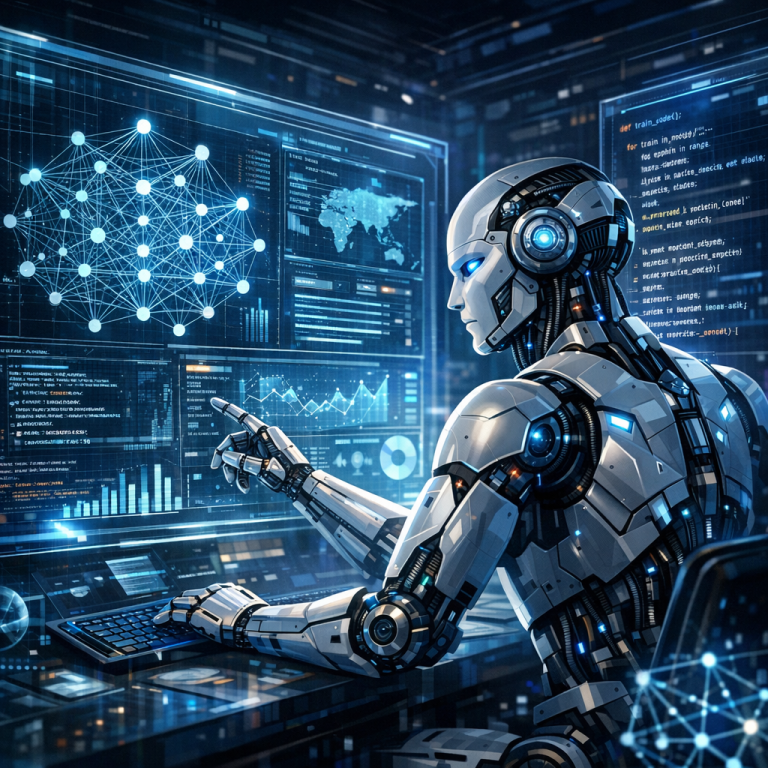

AI agents hacking in action
THE THREAT OF HACKING AI AGENTS VIA MALICIOUS WEB PAGES
The Threat of Hacking AI Agents via Malicious Web Pages – Discover how AI agents can be vulnerable to hacking through malicious web pages. Understand the risks and learn how to protect these systems. In short, this guide explains AI agents hacking in plain language.
AI agents hacking: Direct answer
AI agents hacking occurs when harmful web pages trick AI systems into executing malicious actions. These attacks can lead to data breaches, unauthorized access, and other serious consequences. It's crucial to understand and protect against these vulnerabilities.
AI agents hacking: Key Takeaways
- AI agents can be vulnerable to hacking through malicious web pages.
- These attacks can lead to severe consequences like data breaches.
- Recognizing signs of intrusion is vital for early detection.
- Proactive cybersecurity measures help mitigate risks.
What’s New Today

AI technology is advancing rapidly, with capabilities widening and more sectors utilizing its potential. However, as these advancements occur, so do the techniques employed by cybercriminals to exploit these systems. Recent research has revealed that over 30% of AI agents can be manipulated through intentional attacks on their web interfaces, highlighting an urgent need for enhanced security measures [1]. This percentage raises alarming concerns regarding the safety and integrity of AI technologies as they are increasingly integrated into everyday tasks.
Overview
Watch on YouTube
The integration of AI agents into various applications has undeniably made life easier and more efficient, yet it has also resulted in significant security vulnerabilities. AI agents are designed to automate a plethora of tasks; however, they can be susceptible to hacking through malicious web pages. Such pages may serve to redirect AI systems, compelling them to execute harmful commands that can have devastating effects, both financially and operationally. Case studies show that hacking incidents involving AI can lead to severe disruption in services and loss of trusted data across industries.
Key Features
Understanding AI Hack Vulnerabilities
AI agents primarily rely on web data for learning and decision-making processes. This dependency exposes them to considerable risk, as any tampering with the input data can jeopardize the system’s operations. For example, if an AI agent learns from a dataset that has been compromised by malicious actors, it may process and act upon incorrect or fraudulent information, potentially leading to a cascade of erroneous decisions that affect business operations [2]. To mitigate these vulnerabilities, it is essential for developers to adopt robust data integrity verification processes.
Impact of Malicious Code
Malicious web pages have the capacity to inject harmful scripts or code into the AI’s architecture. Such injections can result in distorted functionality, inevitably leading to erroneous outcomes, system malfunctions, or even total system shutdowns. These disruptions are not trivial; a recent report indicated that the financial implications of such hijacks may exceed $1 billion annually across various industries [3][4]. This staggering figure sheds light on the urgent need for organizations to prioritize the implementation of security measures to fend off these types of threats.
Pros and Cons
Pros
- Increased efficiency of task execution.
- Ability to automate tedious and repetitive processes.
- Enhanced capabilities for data analysis and insights.
Cons
- Potential vulnerabilities to hacking that can compromise data integrity.
- Risk of data breaches resulting in unauthorized access to sensitive information.
- High costs associated with recovery from hacking incidents, including loss of revenue and reputational damage.
Key Insights
To build and maintain secure AI agents, a thorough understanding of potential vulnerabilities is essential. As noted by Dr. Jane Swift, a renowned cybersecurity expert, “The best defense against hacking is proactive education about vulnerabilities. AI is no exception to this rule.” Therefore, building awareness around potential threats and implementing continuous education for developers and end-users is crucial in safeguarding AI agents against malicious attacks.
Patterns
Patterns of hacking often reveal persistent errors or oversights in AI systems. A prime example is the frequent lack of basic security checks. Numerous AI agents fail to perform essential input validation, which permits hackers to exploit this vulnerability. Regular security audits can help identify, rectify, and prevent such weaknesses, leading to more resilient AI systems in the long run.
Controversies
The ongoing debate surrounding AI security invariably revolves around the issue of responsibility. Should developers carry the burden of accountability for breaches that exploit their systems? The answers vary significantly among experts and practitioners. This question remains critical as we increasingly incorporate AI into more aspects of daily life, necessitating a thorough examination of ethical responsibilities in AI development and deployment.
Blind Spots
One substantial blind spot in the security landscape is the underestimation of threats posed by human error. Even the most sophisticated AI security protocols can falter if users are negligent. Common tactics like phishing attacks or social engineering, combined with poor password practices, contribute significantly to vulnerabilities, which can lead to security breaches within AI systems. Comprehensive training and user engagement are fundamental components in mitigating these risks [5].
Opportunities
The enhancement of security measures presents a considerable opportunity for innovation. Investment in AI security technology not only fosters development of new defensive solutions that effectively guard these systems against attacks but also encourages a culture of security within organizations. Implementing a layered security approach that encompasses hardware, software, and human elements is vital for effective protection against emerging threats.
Advanced Breakdown
A thorough analysis of hacking methods targeting AI underscores the necessity for robust defense mechanisms. Regular software updates, implementing network segmentation, and educating users form the backbone of essential strategies required to safeguard systems against intrusions. Knowledgeable teams are less likely to fall prey to social engineering schemes, such as phishing, specifically designed to target AI systems in their operational environments.
Comparison
While traditional software systems can also be compromised, AI systems possess unique characteristics due to their learning properties. Hackers can engineer situations where the AI inadvertently learns and perpetuates harmful behaviors or outputs. In contrast, conventional software typically lacks this adaptive capacity, highlighting the dual nature of AI systems as both exciting and precarious. This juxtaposition necessitates continued vigilance and proactive security measures as technology progresses.
What People Are Asking
This critical topic has prompted numerous questions among users and stakeholders alike. Many individuals are eager to understand what specific actions they can take to safeguard their AI agents from hacking attempts, as well as best practices for monitoring AI behavior for signs of compromise.
Popular Searches and Questions
Frequently searched terms include effective methodologies for securing AI systems. Additionally, users often inquire about recognizable signs that may indicate an AI agent has been hacked. Educational resources that cover detection and prevention methods are in high demand, reflecting a wider recognition of the importance of cybersecurity in AI technologies.
FAQ
- What is AI agents hacking? It refers to attacks that exploit vulnerabilities in AI systems, often using malicious web pages to manipulate the AI’s decision-making processes.
- How can malicious web pages harm AI agents? They can inject harmful code which leads to serious security breaches and can compromise the integrity of data and system functionality.
- What are signs of an AI agent being hacked? Unexpected behavior, unexplained system changes, and unauthorized access attempts can all signal hacking incidents.
- How can one protect AI agents from hacking? By implementing robust cybersecurity measures, continuously monitoring systems for irregularities, and training personnel to recognize and respond to potential threats.
Listen
Share
Related reading
- Revolutionizing Connectivity with OpenRouter.ai
- Understanding the Risks of AI Agents
- Top Open-Source AI Agents for Your Next Project
- AI Agents vs Chatbots: What You Need to Know
- Agentic AI Explained: What You Need to Know
- Top AI Agents of 2026: What to Expect
About the Author